
Research on EFCT in Uganda

In October 2025, our first peer-reviewed article on EFCT in Uganda, authored by Asiimwe and colleagues (2025), was published in the Journal of Marital and Family Therapy: “Acceptability of Emotionally Focused Therapy in Uganda: The Views of Mental Health Workers.”
This groundbreaking publication explored how Ugandan mental health professionals perceive the EFCT model. Drawing on interviews with 23 Ugandan clinicians who completed Conexa’s first 4-day EFCT training in Kampala, the study examined:
Professionals’ personal experiences of EFCT as an experiential model
Their perspectives on EFCT’s cultural fit within Uganda

Overall, practitioners found EFCT deeply resonant—particularly valuing its focus on accessing and organizing emotional experience (Asiimwe et al., 2025). At the same time, participants identified culturally specific challenges they anticipated when applying the model in practice.
This research offers preliminary but powerful insights into the cultural acceptability of EFCT in Uganda and contributes to the global literature on EFCT and multicultural applications. It also advances Conexa’s mission of expanding access to culturally responsive relational therapy and strengthening locally led clinical training pathways across East Africa.
As one of the first publications examining EFCT within East African contexts, this article marks a significant milestone; not only for clinical practice, but also for visibility, representation, and regional research leadership.
Read the full article:
A month later, in November 2025, a second article by Asiimwe et al. (2025) was published in Marriage & Family Review: “Ugandan Practitioner Perspectives on Emotionally Focused Couple Therapy: Insights on Training, Theory, and Cultural Fit.”
Read the full article:
This publication builds directly on Conexa’s first externship in Kampala and continues the essential work of amplifying African voices in the global EFT and relational therapy community.
What the Studies Reveal
Drawing on interviews with Ugandan practitioners who completed Conexa’s EFCT training in Kampala, both articles (Asiimwe et al., 2025a; 2025b) highlight a set of shared themes regarding how clinicians receive, apply, and contextualize EFCT within their cultural and professional environments.
1. Strong resonance with EFCT’s emotional and attachment focus
Across both studies, practitioners reported that EFCT’s emphasis on emotion and attachment strongly aligned with Uganda’s relationally oriented cultural values. Clinicians described the model as intuitive, meaningful, and congruent with local norms around connection, mutual support, and community belonging.
2. Integration into clinical work with couples and families

Participants noted applying EFCT concepts shortly after the training, especially in couple and family therapy contexts. They reported immediate shifts in how they conceptualized emotional processes, relational patterns, and the deeper needs driving conflict. EFCT was seen as offering a clearer framework for understanding and repairing relational distress.
3. “Self of the therapist” insights and personal transformation
Both articles describe how practitioners experienced personal shifts as they explored their own emotional histories, attachment patterns, and relational tendencies through EFCT practices. Many expressed that EFCT fostered deeper emotional awareness and contributed to their own relational healing, underscoring EFCT’s well-documented impact on the therapist’s internal development.
4. Cultural considerations and the need for contextualized application
Clinicians emphasized that while EFCT resonates deeply, its implementation requires cultural attunement. They identified important considerations including:• local emotional norms and expectations around expression• gender roles and power dynamics within relationships• communal healing traditions and extended-family influence• the need for language-sensitive metaphors and examples
They expressed confidence in EFCT’s potential but noted that culturally grounded adaptations are essential to ensure accessibility and effectiveness.
5. Training implications and the need to expand emotional literacy resources

As highlighted especially in the second article, practitioners underscored the need for:• ongoing mentorship and supervision• more opportunities for practice-based learning• locally relevant emotion-education materials• long-term professional development pathways• emotional literacy resources for clients and communities
They emphasized that sustainable EFCT growth in Uganda requires continued training structures rooted in local leadership and context-responsive educational tools.
Why This Matters
Taken together, these two publications represent a landmark contribution to the global EFCT literature and to the growing body of African-led scholarship in relational therapy. Rather than standing as separate studies, they form a single, coherent narrative about how EFCT is received, experienced, and adapted by Ugandan practitioners. This emerging body of work demonstrates how clinicians in East Africa are not only applying EFCT but reshaping its meaning through their cultural wisdom, relational values, and clinical realities.
Centering the lived experiences of Ugandan clinicians
Across both articles, practitioners offer deeply personal and professional reflections on their encounters with EFCT. Their voices bring to light experiential knowledge long absent from mainstream EFCT research. They describe how the model resonates with their cultural grounding, how it shifts their clinical conceptualizations, and how it influences their own emotional lives—expanding global understandings of relational healing.
Honoring cultural wisdom as a therapeutic resource
Practitioners demonstrate the ways EFCT aligns with relational values central to Ugandan life—interdependence, shared caregiving, and extended-family systems. Their insights invite the global EFT community to broaden its understanding of emotion, connection, and healing through culturally grounded frames, challenging Western assumptions and enriching cross-cultural relevance.
The emergence of a community-rooted EFT movement
Both articles highlight early signs of a self-sustaining EFT movement in Uganda. Practitioners began applying EFCT immediately, envisioning ongoing supervision, mentorship, and leadership from within their communities. This reflects a shift from “importing” a model to co-creating one shaped by Ugandan relational realities and emotional traditions.
The strength of collaborative, cross-cultural training
These publications demonstrate what becomes possible when training is grounded in humility, reciprocity, and cultural responsiveness. Trainers, scholars, and practitioners engaged in a collaborative process of mutual learning—identifying both alignment and areas requiring adaptation. This sets a global standard for culturally attuned relational therapy training.
Building foundations for emotional literacy and training resources
A shared theme across the research is the urgent need for resources: ongoing supervision, accessible emotional literacy tools, context-sensitive training materials, and long-term development pathways. These foundational elements are essential for strengthening therapists, families, and communities as EFCT continues to take root in Uganda.
The transformative impact of donors and community partners
The findings also highlight the critical role of donors and partners in expanding access to high-quality relational care. These publications demonstrate that when training opportunities reach historically underserved regions, they can catalyze lasting clinical and cultural change; empowering practitioners and supporting families across generations.
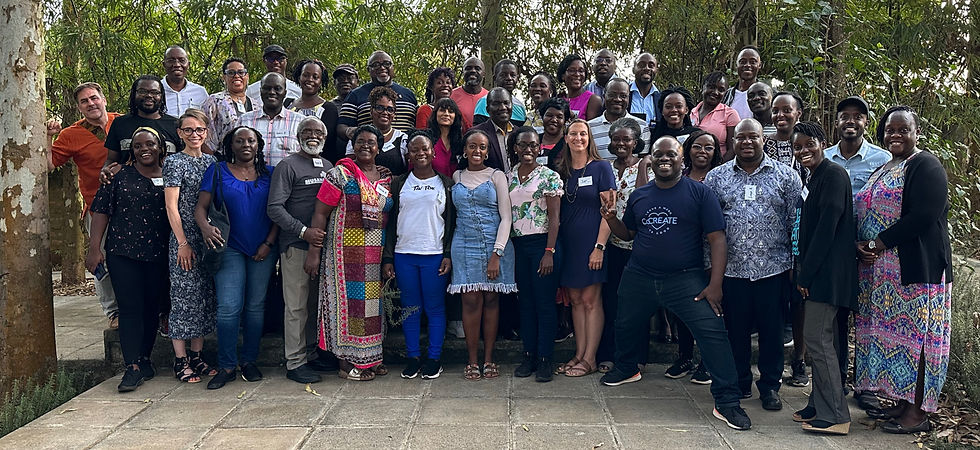
This recognition is shared by the many people who contributed to this work. We thank the authors; our trainers, Dr. Paul Guillory and Dr. Elmien Lesch; and the Conexa team whose coordination and support made the training and research possible. We are also grateful to our donors and community for enabling this important work.


Comments